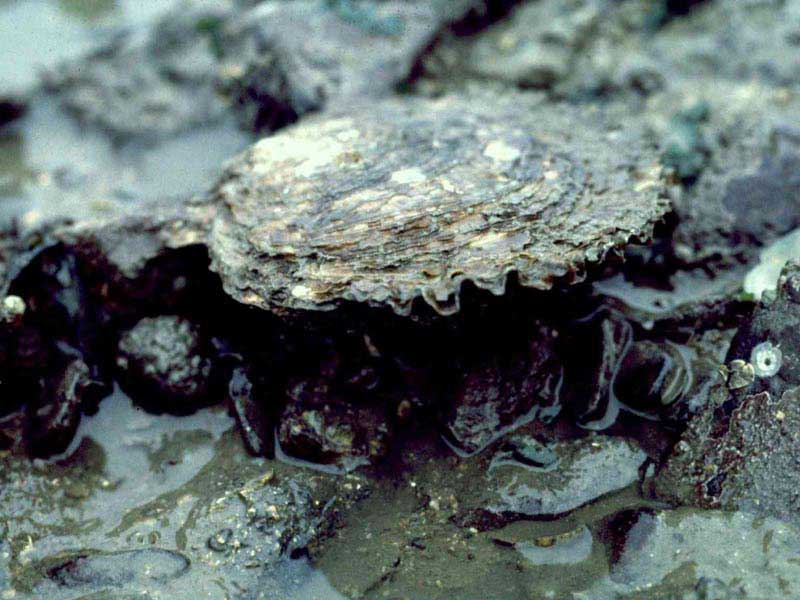
On Tuesday, March 10, 2026, organized by the Croatian Network of Marine Protected Areas, an online expert lecture was held on the potential and prospects for the restoration of the European flat oyster (Ostrea edulis) in the Adriatic Sea. The lecture was delivered by dr. sc. Daria Ezgeta Balić, Senior Research Associate at the Institute of Oceanography and Fisheries, who presented the latest insights on this ecologically important species, as well as current research initiatives aimed at its conservation.
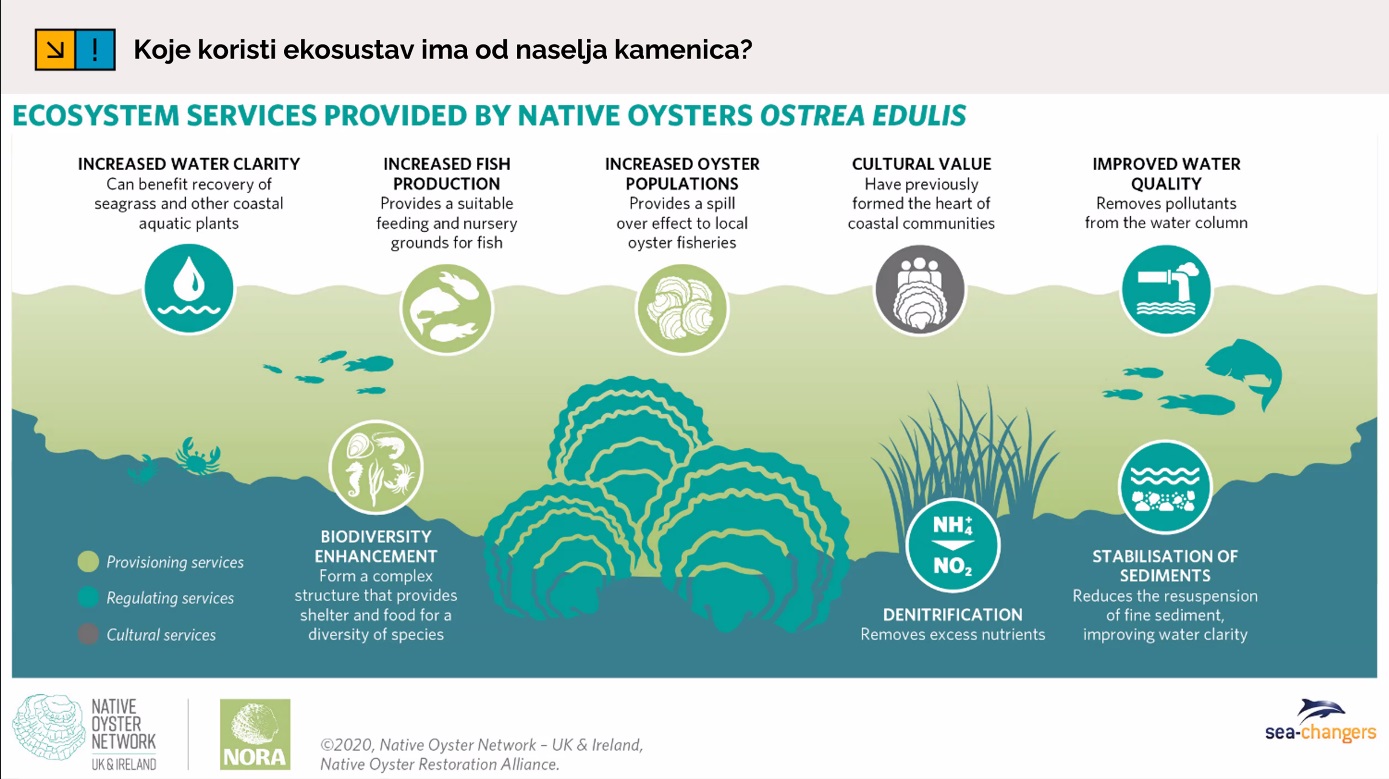
The European flat oyster plays a key role in marine ecosystems as it forms biogenic reefs—complex habitats that provide shelter, substrate, and conditions for the development of numerous marine organisms. In this way, it contributes to increased local biodiversity, ecosystem stability, and resilience to environmental change. In addition, oysters are involved in natural water filtration processes, thereby influencing seawater quality and the overall functioning of marine ecosystems.
Despite its importance, the European flat oyster is in a highly unfavorable state across most of Europe. It is estimated that more than 90% of its natural reefs have disappeared, while the remaining populations are often described as degraded or functionally extinct. The main causes of this decline are long-term overexploitation and diseases, particularly parasitic infections caused by the species Bonamia ostreae.
In the northern Adriatic, the European flat oyster still persists in natural populations, making this region particularly important in the context of its future restoration. However, recent data indicate a significant decline in abundance over the past decade, further emphasizing the need for systematic research and timely action. Although some knowledge exists on farmed populations, natural populations in the eastern Adriatic remain insufficiently studied.
In this context, the POPOyster project was presented as the first comprehensive and multidisciplinary research approach focused on the European flat oyster in the Adriatic Sea. The project aims to collect key biological and ecological data on natural populations of species Ostrea edulis, which are essential for planning effective conservation and restoration measures.
The project includes a range of research activities, such as:
• analysis of the current status of oyster beds in the northern Adriatic
• study of biological and ecological characteristics, such as reproduction and feeding, in relation to environmental conditions
• investigation of food webs and trophic relationships
• advancement of knowledge on suitable substrates for oyster settlement
The particular value of the project lies in its multidisciplinary approach, which includes biology, ecology, molecular research, fisheries science, physical oceanography, ecological modeling, and materials science. As such, POPOyster represents an important first step toward the long-term restoration of natural oyster populations in the eastern Adriatic.
The results obtained will serve as a solid scientific basis for decision-making and the development of policies aimed at the protection, conservation, and restoration of this key species, as well as marine ecosystems as a whole.